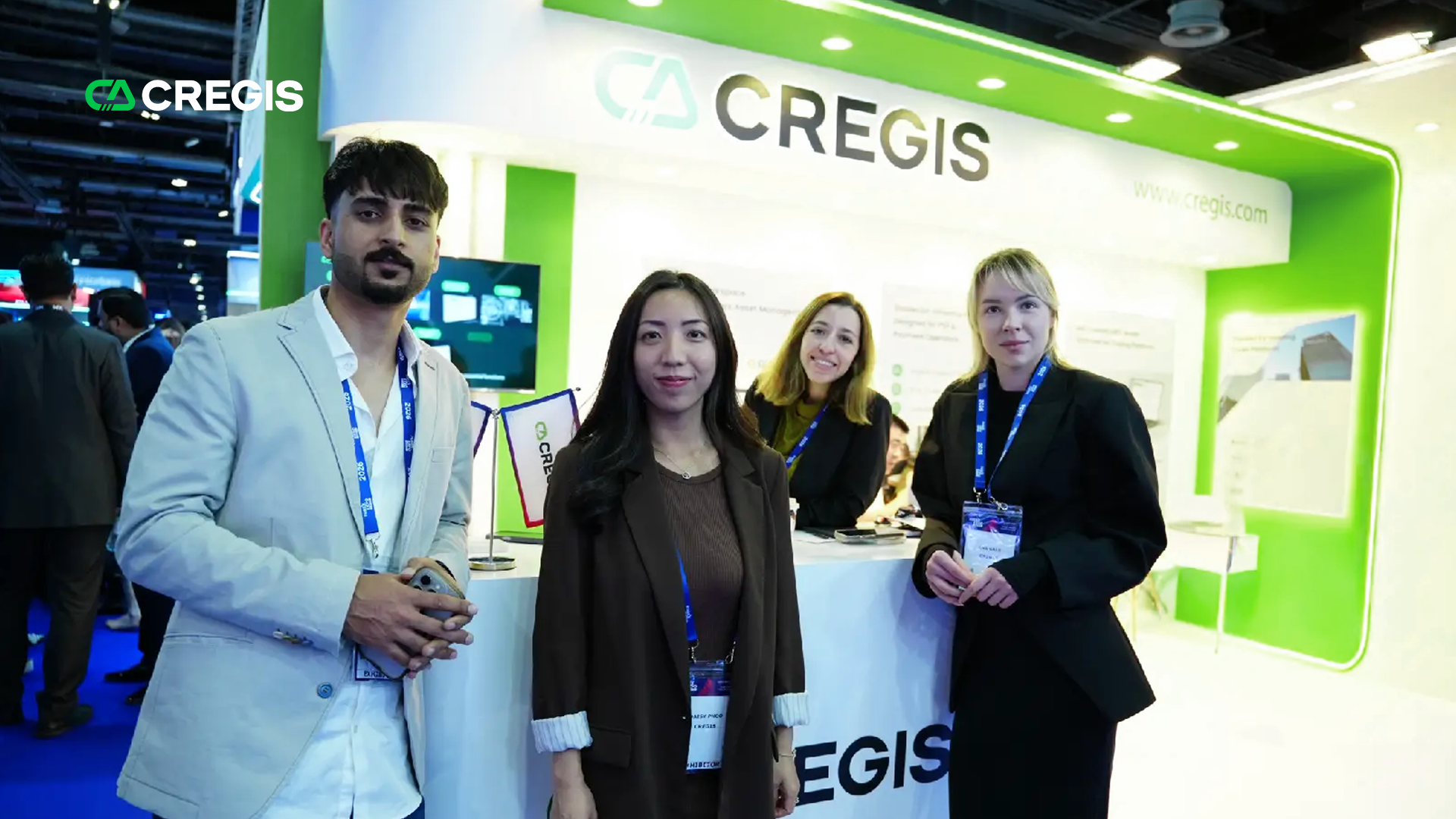
Cregis, an enterprise digital asset infrastructure platform, is marking two years of growth in the Middle East following its participation in Forex Expo Dubai 2026, where it met with forex brokers, financial institutions, fintechs and payment companies exploring digital asset infrastructure.
The Middle East was Cregis’ first major step beyond its Asia-Pacific roots. Since entering the region, the company has built a base of around 200 long-term enterprise clients with active deployments. More than half of them now come from forex and other traditional financial businesses, reflecting a broader shift in how digital asset infrastructure is being adopted across the financial sector.
Over the past two years, Cregis has seen digital asset infrastructure move further into the day-to-day operations of traditional financial businesses. For many companies, digital assets are no longer treated as a standalone crypto function, but increasingly as part of existing payment, treasury and cross-border operations.
This shift is also reflected in Cregis’ growing global client base, which spans forex brokers, banks, payment providers and fintech companies, including ATFX Group, Bison Bank and Interlace. Globally, Cregis has served more than 4,000 businesses across 50+ countries, with more than $300 billion in cumulative transaction volume.
“Two years ago, much of the conversation was about whether businesses should use digital assets. Today, the conversation is much more practical: how do you operate them properly, and how do you fit them into an existing financial business?” said Shawn Yan, Founder and CEO of Cregis. “That change is particularly clear in the Middle East. Forex brokers and financial institutions are not trying to become crypto companies. They are looking for reliable infrastructure that can support payments, treasury and asset operations alongside what they already do.”
Cregis has built its platform around a unified infrastructure layer covering three core capabilities: Wallet-as-a-Service (WaaS), fund flow orchestration and regulated custody, supported by operational hubs and settlement networks. Together, they provide the infrastructure for businesses to manage wallets, move funds and govern digital assets across multiple networks and use cases.
For financial institutions, the focus is not simply on moving assets on-chain, but on controlling how those assets are accessed, transferred and managed. Cregis’ infrastructure supports role-based access, approval workflows, transaction policies and audit trails, allowing businesses to build digital asset operations around established governance and compliance processes. Cregis Payment Engine supports collections, payouts and settlement, while its custody infrastructure is designed around key management, policy enforcement and controlled access.
This approach has enabled Cregis to serve businesses that operate in regulated and compliance-sensitive environments, including banks, forex brokers, payment providers and fintechs. Rather than requiring these businesses to build a separate crypto operation, Cregis provides infrastructure that can be integrated into existing financial workflows while maintaining institutional controls.
Security is a core part of that infrastructure. The platform is independently audited against internationally recognised standards, including SOC 2 Type I, SOC 2 Type II and ISO 27001. Its security architecture also incorporates MPC, HSM and TEE technologies, supporting the protection and controlled management of digital assets at scale.
Cregis established Dubai as its Middle East hub in 2024, building a local team and using the UAE as a base to serve businesses across the region and surrounding markets. Its location also provides a bridge to Europe, Africa, South Asia and the CIS, supporting the company’s wider international expansion. As the regional business has matured, the Middle East has also become an important base for developing local partnerships, understanding market-specific requirements and supporting customers across multiple financial markets.
The company has since expanded into Europe, Latin America, Africa and the United States, taking with it the experience gained from building and operating in the Middle East.
“The Middle East was our first real test of whether what we built in Asia-Pacific could work across a very different market,” Yan said. “The lesson has been straightforward: global infrastructure needs to be secure and scalable, but it also needs to fit the way businesses operate in each market. That is the standard we are taking into our next stage of international expansion.”
About Cregis
Cregis is a digital asset infrastructure platform, providing technology for digital asset collections, payouts and fund operations. Its offerings include wallet infrastructure, fund flow orchestration and regulated custody capabilities. These solutions help businesses manage digital assets with greater security, efficiency and control. Founded in 2017, Cregis serves financial institutions, payment service providers (PSPs), foreign exchange (Forex) brokers, fintechs and Web3 businesses. The company operates across Asia, the Middle East and Latin America. Today, Cregis supports more than 4,000 businesses across over 50 countries.
關於Cregis
Cregis成立於2017年,總部位於香港,是一家面向企業的數字資產基礎設施平台。過去九年間,Cregis已服務全球50多個國家和地區的4,000餘家企業客戶,涵蓋加密交易所、金融科技公司、支付服務商、數字銀行、經紀商及Web3企業等機構。
圍繞企業數字資產運營需求,Cregis構建了覆蓋錢包基礎設施(WaaS)、資金流編排(Rails)及合規託管能力(Custody)的產品體系,幫助企業完成從資產存放與控制、資金流轉與運營,到治理與合規管理的完整閉環。
其中,核心產品 Wallet-as-a-Service 和 Payment Engine 已廣泛應用於企業級數字資產運營場景。隨著數字資產基礎設施需求持續全球化,Cregis始終專注於一件事:幫助企業以更強控制力、更低運營複雜度和更完善的合規能力使用數字資產。