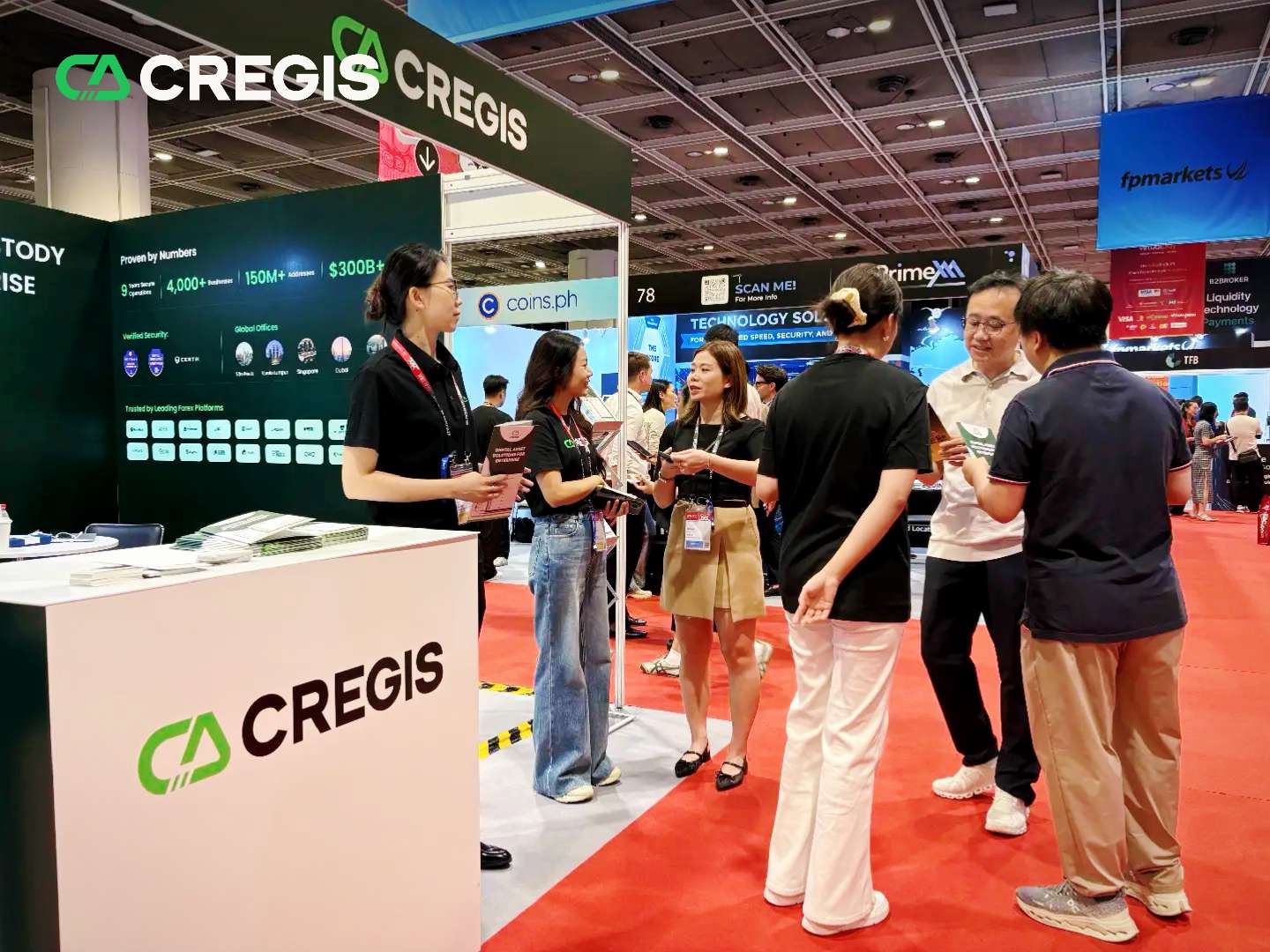
Cregis participated in iFX EXPO Asia 2026 at the Hong Kong Convention and Exhibition Centre from October 7 to 9. At Booth 125, the team met forex brokers, trading platforms, payment providers and fintech companies to discuss the payment requirements of international businesses and the risk considerations involved in adopting digital assets. Cregis presented its infrastructure and explored how it could fit into visitors’ products and operations.
Supporting Businesses as They Enter New Markets
For forex and CFD brokers expanding internationally, straightforward deposits and withdrawals are an essential part of the client experience. Settlement speed also directly affects cash flow and liquidity management, with earlier access to funds giving platforms greater flexibility to schedule payouts and allocate capital. Stablecoins enable funds to move around the clock, offering brokers additional ways to improve cross-border payments and serve clients in different markets.
At iFX EXPO Asia, Cregis demonstrated how Payment Engine can integrate with existing client account, order management and finance systems through APIs. Businesses can incorporate digital asset collections, payouts, payment tracking and reconciliation into established workflows, with support for instant onchain settlement, subject to network confirmation and platform processing rules. For payment providers that already aggregate multiple fiat payment methods, Cregis supplies the wallet and transaction infrastructure needed to add crypto and stablecoin payments to their offering. This allows them to extend their existing services and give merchants and platform clients a broader choice of payment methods.
Helping Businesses Navigate Digital Asset Risk
For companies exploring digital assets, risk management is an ongoing responsibility. They need to understand how onchain transactions work, assess where funds come from and go, and establish responsibility for asset management and transaction authorization. Those arrangements must evolve with the business and the regulatory environment. Choosing infrastructure therefore involves considering the knowledge, implementation experience and support available to the people who will operate it, alongside the technology itself.
Cregis introduced its AML and KYT screening, wallet permissions and transaction approval capabilities, with discussions on how these controls can be incorporated into payment and funds management processes. The company also outlined how support with integration, workflow configuration and product use can help businesses put those capabilities into practice. Sharing market observations and operational experience is part of that work, helping clients make informed decisions as they assess digital assets, implement systems and develop their internal expertise.
“Good technology is essential, but clients also value informed advice and support as they put it to use. We want to share what we learn from the industry and from our work with businesses, so clients can assess opportunities with a better understanding of what is involved. Events such as iFX are equally valuable to us: hearing directly about the challenges companies face in different markets helps us improve both our products and our service.”
Shawn Yan, Founder, Cregis
Understanding What Businesses Need
iFX EXPO Asia gave Cregis an opportunity to hear directly from companies about their expansion plans, payment requirements and questions around digital assets. Those conversations provide a starting point for more detailed work on integration and service delivery. Cregis will continue the dialogue with clients and partners, drawing on their experience to support the needs of businesses operating across markets.
關於Cregis
Cregis成立於2017年,總部位於香港,是一家面向企業的數字資產基礎設施平台。過去九年間,Cregis已服務全球50多個國家和地區的4,000餘家企業客戶,涵蓋加密交易所、金融科技公司、支付服務商、數字銀行、經紀商及Web3企業等機構。
圍繞企業數字資產運營需求,Cregis構建了覆蓋錢包基礎設施(WaaS)、資金流編排(Rails)及合規託管能力(Custody)的產品體系,幫助企業完成從資產存放與控制、資金流轉與運營,到治理與合規管理的完整閉環。
其中,核心產品 Wallet-as-a-Service 和 Payment Engine 已廣泛應用於企業級數字資產運營場景。隨著數字資產基礎設施需求持續全球化,Cregis始終專注於一件事:幫助企業以更強控制力、更低運營複雜度和更完善的合規能力使用數字資產。