30 October 2026 | Developments and market data as of approximately 11:00 HKT (UTC+8)
The security breach at Binance has brought the custody of enterprise digital assets, control over transactions and incident preparedness back into focus.
On 30 October, Binance disclosed that the incident had affected an estimated $6.3 billion in assets, with around $3 billion frozen in coordination with blockchain partners. If that estimate holds, this would be the largest crypto theft on record, exceeding the roughly $1.5 billion stolen from Bybit in 2025.
For businesses working with digital assets, the incident raises questions about controls before funds move, the response to suspicious activity and the recovery of operations. Markets react quickly. Businesses also have to manage the payments, receipts and asset transfers that take place every day.
What happened at Binance?
Large, unusual outflows involving ETH, USDT and other assets appeared in Binance-linked wallets early on 30 October, Hong Kong time. At around 5 a.m., Changpeng Zhao responded to a Tree News post on X, saying Binance appeared to have been hacked and thanking Tether and Circle for freezing funds quickly. As a shareholder, he added, he expected all user funds to be fully covered.

Image source: Changpeng Zhao (@cz_binance), X.
At around 5 a.m., Tether and Circle also published updates on their response. Tether CEO Paolo Ardoino disclosed that more than $1.567 billion in USDT had been frozen. Circle CEO Jeremy Allaire reported freezing more than $800 million in USDC.
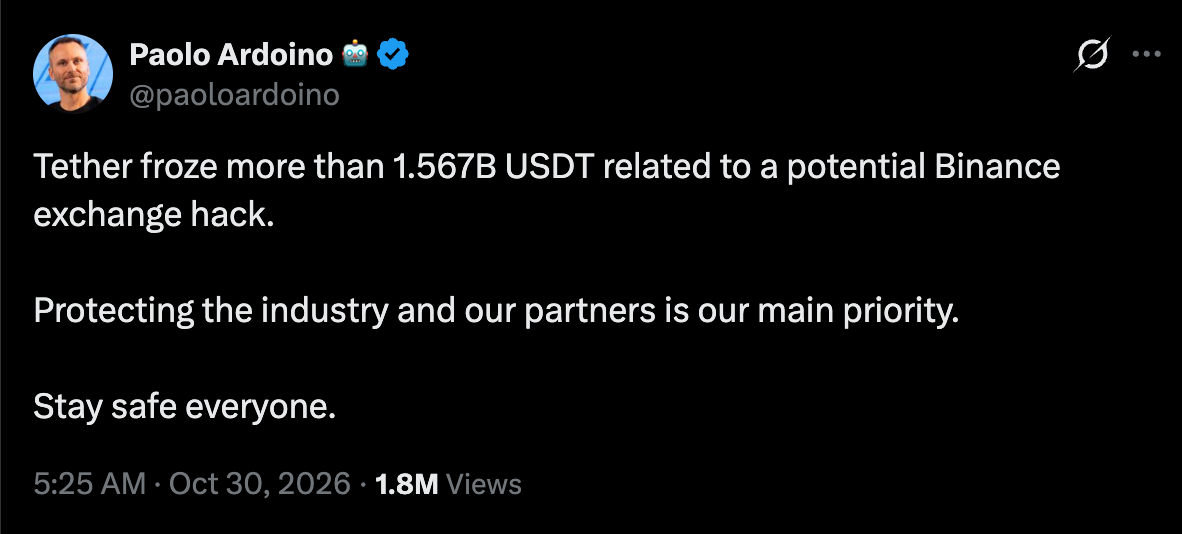
Image source: Tether CEO Paolo Ardoino (@paoloardoino), X.
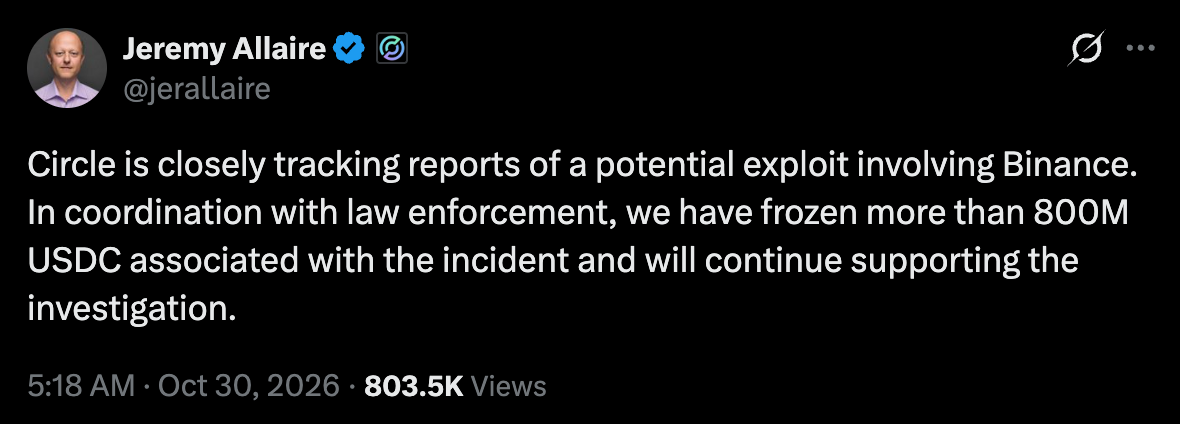
Image source: Circle CEO Jeremy Allaire (@jerallaire), X.
By publication, Binance had reported around $3 billion in frozen assets. It had also suspended deposits and withdrawals and pledged to cover all losses from the incident.
TRM Labs attributed the attack to TraderTraitor, a North Korean hacking group. Binance’s preliminary investigation pointed to a compromised DevOps engineer’s laptop that allowed the attackers to access a service container and submit unauthorised withdrawal transactions. TRM reported that the attackers still controlled roughly 420,000 ETH and 18,270 BTC, worth about $2.4 billion combined. Binance revoked authorisations for the affected addresses and began working with law enforcement and blockchain investigators to trace the funds.
What can businesses learn about managing their funds?
Binance moved quickly to suspend deposits and withdrawals, coordinate asset freezes, publish updates and commit to covering losses. That speed highlights the value of having response arrangements in place before an incident. Businesses need to decide how funds are held and used, who takes charge when something goes wrong, and how operations will resume as part of their everyday planning.
Before an incident: separate funds and assign responsibility
Incoming payments, routine payouts and long-term reserves serve different purposes. Each should have designated managers, defined access and appropriate approval requirements. Frequently used payout wallets can hold the working funds needed for operations, while transfers from reserves receive additional review. Businesses also need visibility into balances across exchanges, wallets and on-chain addresses, with a clear understanding of which funds must remain accessible so that a single platform suspension does not interrupt routine payments.
A business using Cregis for stablecoin payments, for example, can organise wallets by collection, consolidation, payout and reserve functions, assigning managers and approval workflows to each. Operations staff can handle routine payments, finance can check amounts and supporting business records, and designated managers can approve larger transfers or payments to new addresses. This gives the business a consistent way to manage daily activity while limiting what any individual or system can do.
These arrangements also depend on the wallet’s underlying security. Cregis enterprise self-custodial wallets combine MPC (multi-party computation) with multiple safeguards, allowing businesses to distribute key shares across devices and require a defined threshold of participants to sign transactions without reconstructing the full private key. In an external attack, compromising one device and obtaining one key share would not let an attacker independently sign a transfer if the shares under their control remain below that threshold. Combined with independent checks of the actual transaction by other participants, this architecture helps prevent a local compromise from escalating into an unauthorised asset transfer. Businesses can distribute control among team members and combine it with approval rules, transaction checks and activity records to reduce exposure to compromised devices, excessive individual permissions and insider misconduct.
Automation also needs clear limits. Businesses can use Cregis to apply predefined conditions to routine fund consolidation and payments to approved addresses, while requiring additional approval for new addresses, large transfers or changes to management rules. Approvers should check the recipient, network, asset, amount and supporting business documents rather than simply acknowledge a payment notification. Staff departures, device replacements and API credential handovers should also trigger a permissions review.
Protection funds and backup liquidity require advance planning too. Binance’s pledge to use its Secure Asset Fund for Users (SAFU) and corporate funds to cover losses illustrates the role of reserves. Businesses can assess which settlement obligations would remain due during a payment suspension, arrange an independent source of working funds and identify who can approve emergency transfers.
During an incident: contain outflows and coordinate tracing and freezes
When an unusual transfer is detected, businesses need to follow their response plan to suspend affected payouts, consolidation processes or API tasks, isolate suspicious devices and revoke relevant access. If control of a receiving address or wallet is in doubt, business teams should also be told to stop sending funds to it. The incident lead should have authority to initiate these steps without seeking approval through multiple levels during the emergency.
For businesses managing wallets with Cregis, transaction and activity records can help establish which wallets are affected, which transfers have a legitimate business purpose, and who initiated and approved each operation. Teams should preserve transaction hashes, addresses, networks, assets, amounts and detection times alongside business-system logs to support investigation and coordination with external parties.
The freezes by Tether and Circle show why external coordination needs to begin quickly. Businesses should maintain contact channels with exchanges, stablecoin issuers, blockchain investigators and law enforcement, with named staff responsible for submitting information and following up. The options vary by asset and transfer route; freezing and recovery depend on the relevant parties’ authority and the actual status of the funds.
After an incident: reconcile assets and restore operations gradually
Before bringing systems back online, teams should identify and fix the affected components, review devices, accounts, credentials and transaction authorisations, and reconcile on-chain balances against business ledgers and pending payments. Funds transferred out, frozen, recovered and still being traced should be recorded separately. Frozen assets must complete the necessary recovery or release procedures before being treated as available funds.
Recovery can begin with reviewed wallets, small transactions and restricted permissions. Once receipt identification, approvals, signing and reconciliation are working correctly, automation and normal limits can be restored gradually. Payments queued during the incident should be checked individually before retrying them to prevent duplicate payouts.
The review should lead to specific changes: which permissions were too broad, which approvals failed to check the actual transaction, which anomalies went unnoticed, and which external contacts delayed the response. Updating fund allocation, approval procedures, staff training and response exercises turns those findings into lasting improvements in asset management.
The impact on the market
Binance’s rapid asset freezes and commitment to cover losses offered some reassurance, but a theft on this scale still raises concerns about the safety of exchange-held funds and the potential for further selling. Many investors remember the market after the Bybit breach, when Bitcoin fell from close to $100,000 to below $80,000 within a week. With a larger sum involved at Binance, attention has turned to whether the initial decline could trigger more forced closures of leveraged positions and another liquidation cascade.
As the news spread, Bitcoin fell from around $80,849 to a low near $76,500, a decline of about 5.4%. By 11 a.m. Hong Kong time on 30 October, it had recovered to around $77,436.
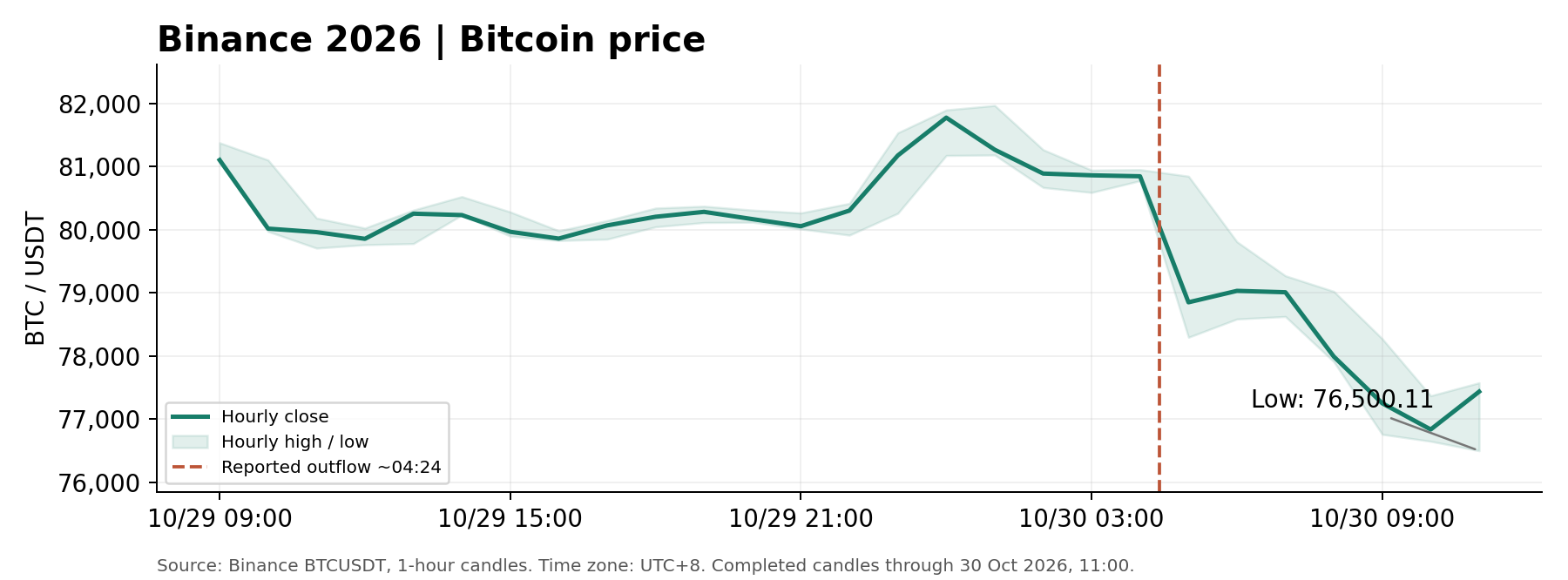
Figure 1 | BTC prices around the Binance incident. Prices in USDT; times in HKT (UTC+8). Source: Binance hourly market data.
CoinGlass data at 9:18 a.m. that day showed that more than 180,000 traders had been liquidated over the preceding 24 hours. Total liquidations reached approximately $1.112 billion, including around $940 million in long positions.
An exchange’s promise to cover losses can ease fears about missing account assets, but holders remain exposed to price movements. When voluntary selling and forced liquidations reinforce each other, the decline can intensify.
Previous major exchange thefts have produced different market reactions.
21 February 2025: Bybit
After approximately $1.5 billion in assets was stolen from Bybit, Bitcoin fell from close to $100,000 towards $97,000. Around $100 million in leveraged positions were liquidated during the sudden decline. Over the following week, the price briefly reached around $79,666, about 20% below its pre-incident level. Uncertainty over tariff policy was also weighing on risk assets at the time.
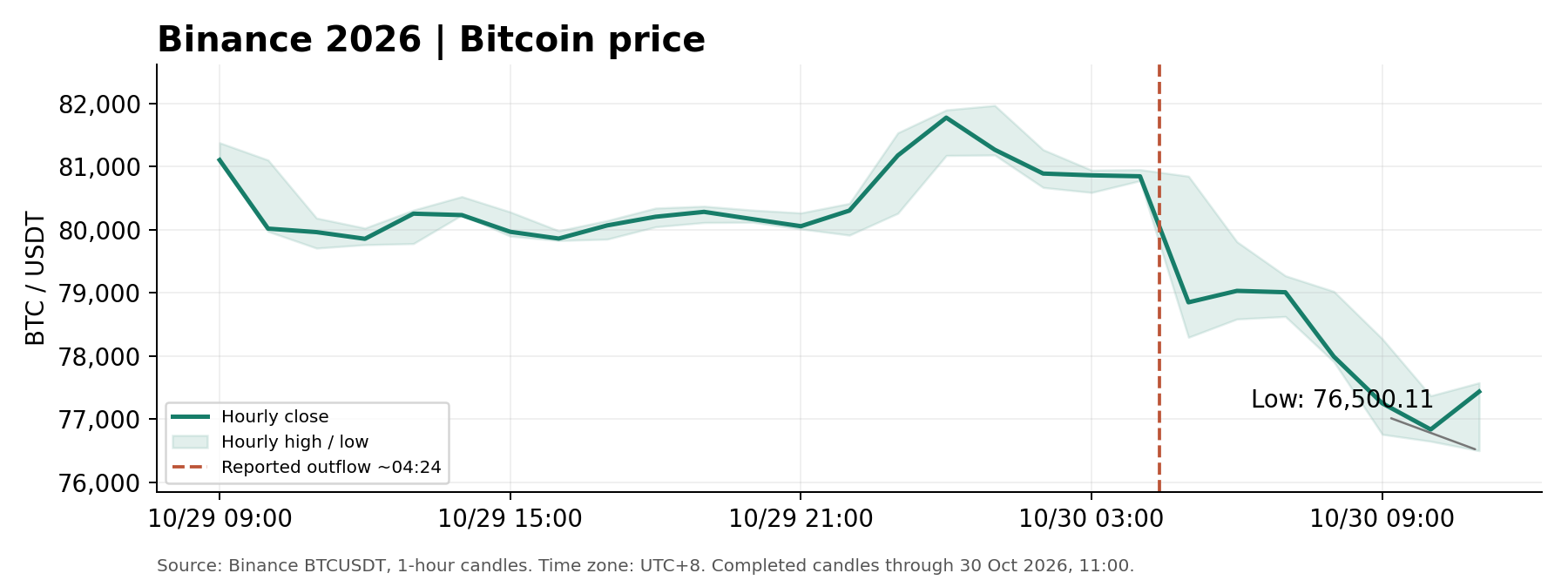
Figure 2 | Daily BTC prices in USD around the Bybit incident. Source: Coin Metrics.
26 January 2018: Coincheck
Approximately 523 million NEM tokens were stolen from Japan’s Coincheck exchange, worth around $534 million at the time.
Bitcoin was trading at roughly $11,130 the day before the incident. It continued to fall, briefly touching $5,912 on 6 February, a decline of about 47% over roughly 12 days. Tighter crypto regulation in several countries compounded the retreat that had already followed the previous bull market.
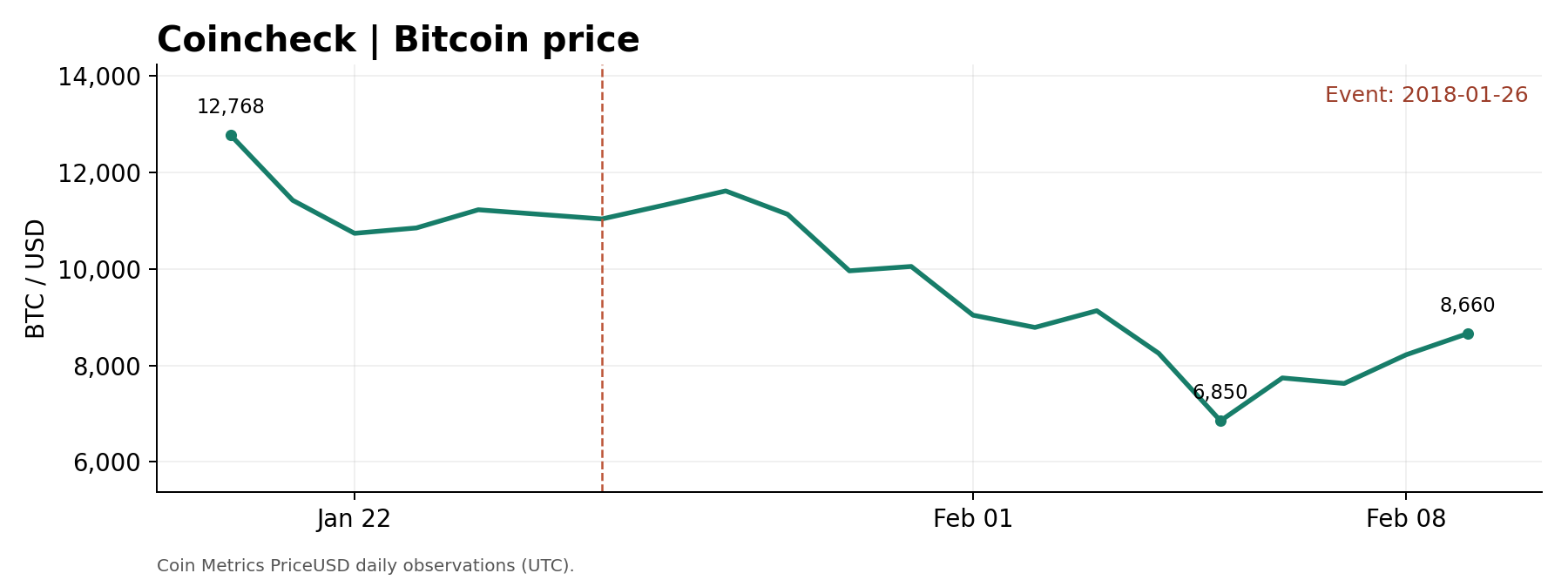
Figure 3 | Daily BTC prices in USD around the Coincheck incident. Source: Coin Metrics.
February 2014: Mt. Gox
Mt. Gox initially reported about 850,000 BTC missing, worth roughly $460 million at the time. After withdrawals were suspended, Bitcoin on the platform fell from around $829 at the start of February to roughly $135 by 25 February, a decline of about 84%. Over a similar period, the daily market price fell from around $764 on 6 February to $534 on 25 February, a drop of roughly 30%.
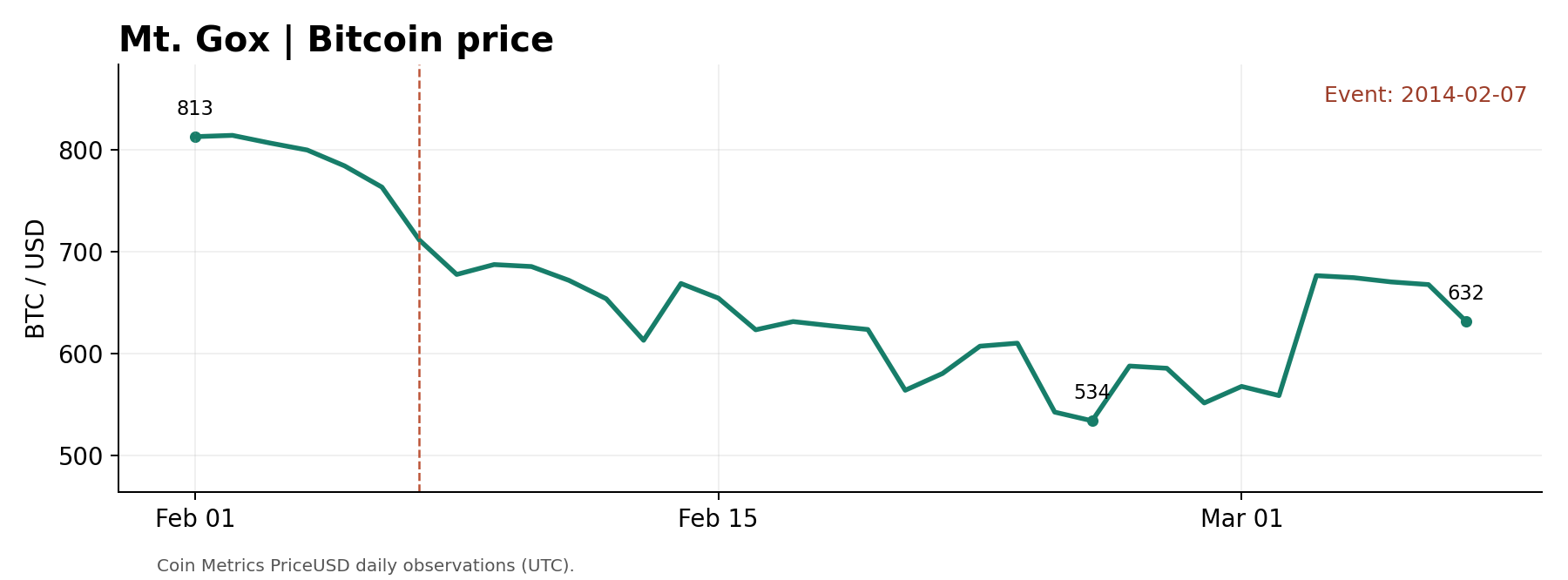
Figure 4 | Daily BTC prices in USD around the Mt. Gox withdrawal suspension. The dashed line marks 7 February. Source: Coin Metrics.
24 September 2026: Bitget
Bitget later disclosed that the stolen assets were worth approximately $387.5 million. Bitcoin moved from around $84,398 the day before the incident to $84,100 the following day, a decline of less than 1%. Two weeks later it was trading near $81,754, about 3.1% below its pre-incident level. The immediate sell-off was smaller than the one that followed the Bybit breach.
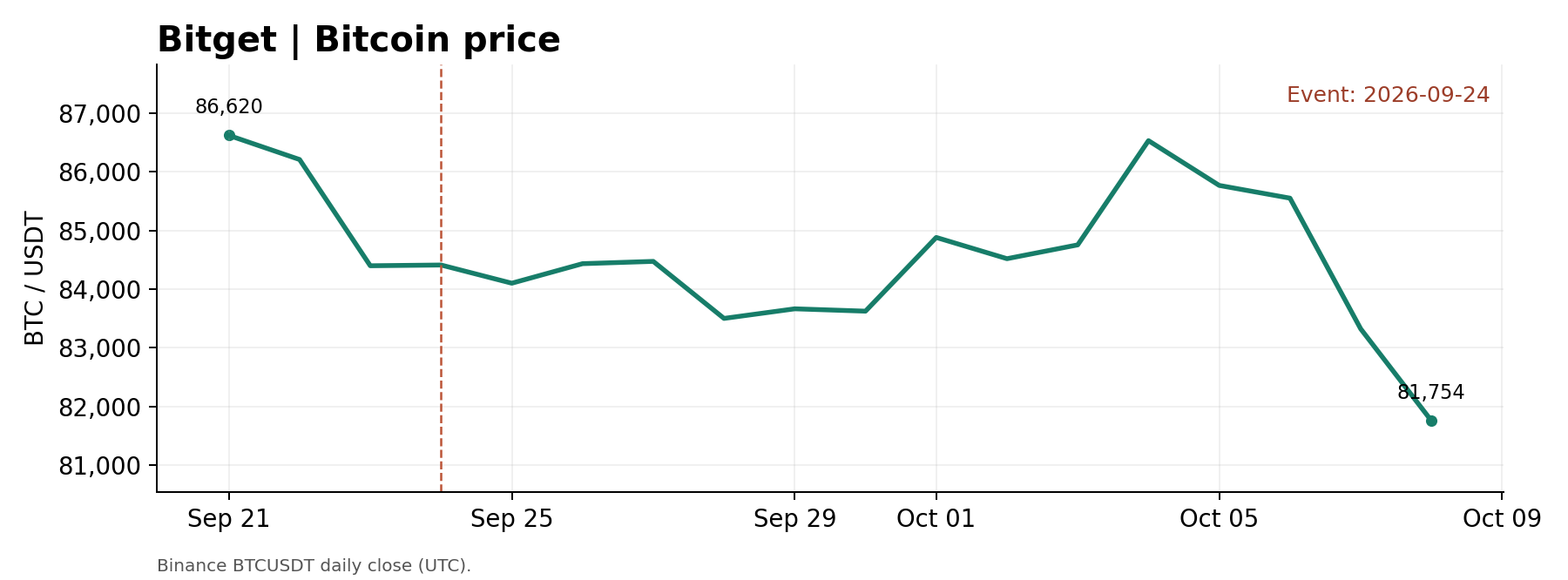
Figure 5 | Daily BTC/USDT closing prices around the Bitget incident. Source: Binance daily market data.
At the amount currently disclosed, the Binance incident exceeds the scale of these earlier cases. Bitcoin has already endured an initial round of selling and a brief rebound, but defensive selling, leveraged liquidations and further movement of stolen assets could weigh on prices in the coming weeks. Freezes and compensation can help ease the immediate fear, while confidence may take longer to recover.
Making security part of everyday fund management
Beyond price movements, businesses have the ongoing task of strengthening their own fund management. Key protection, segregated responsibilities, transaction approvals, staff controls and incident response need to run through digital asset operations, reducing the risk that a failure in one area disrupts the wider business.
In the Binance incident, rapid freezes and the pledge to cover losses helped the response, while reinforcing the need to prepare before funds move. As digital assets become part of everyday operations, businesses can use Cregis to bring wallet management, fund transfers and transaction approvals into clear workflows, with defined permissions, responsibility and records for each payment. Putting those arrangements into daily practice provides a firmer foundation for managing funds as the business grows.
關於Cregis
Cregis成立於2017年,總部位於香港,是一家面向企業的數字資產基礎設施平台。過去九年間,Cregis已服務全球50多個國家和地區的4,000餘家企業客戶,涵蓋加密交易所、金融科技公司、支付服務商、數字銀行、經紀商及Web3企業等機構。
圍繞企業數字資產運營需求,Cregis構建了覆蓋錢包基礎設施(WaaS)、資金流編排(Rails)及合規託管能力(Custody)的產品體系,幫助企業完成從資產存放與控制、資金流轉與運營,到治理與合規管理的完整閉環。
其中,核心產品 Wallet-as-a-Service 和 Payment Engine 已廣泛應用於企業級數字資產運營場景。隨著數字資產基礎設施需求持續全球化,Cregis始終專注於一件事:幫助企業以更強控制力、更低運營複雜度和更完善的合規能力使用數字資產。