As stablecoins, on-chain payments, and institutional-grade custody continue to evolve, the line between traditional finance and digital assets is rapidly fading. From banks and payment providers to multinational corporations, a growing number of market participants are rethinking how capital moves globally and how blockchain can be deployed in real-world business scenarios.
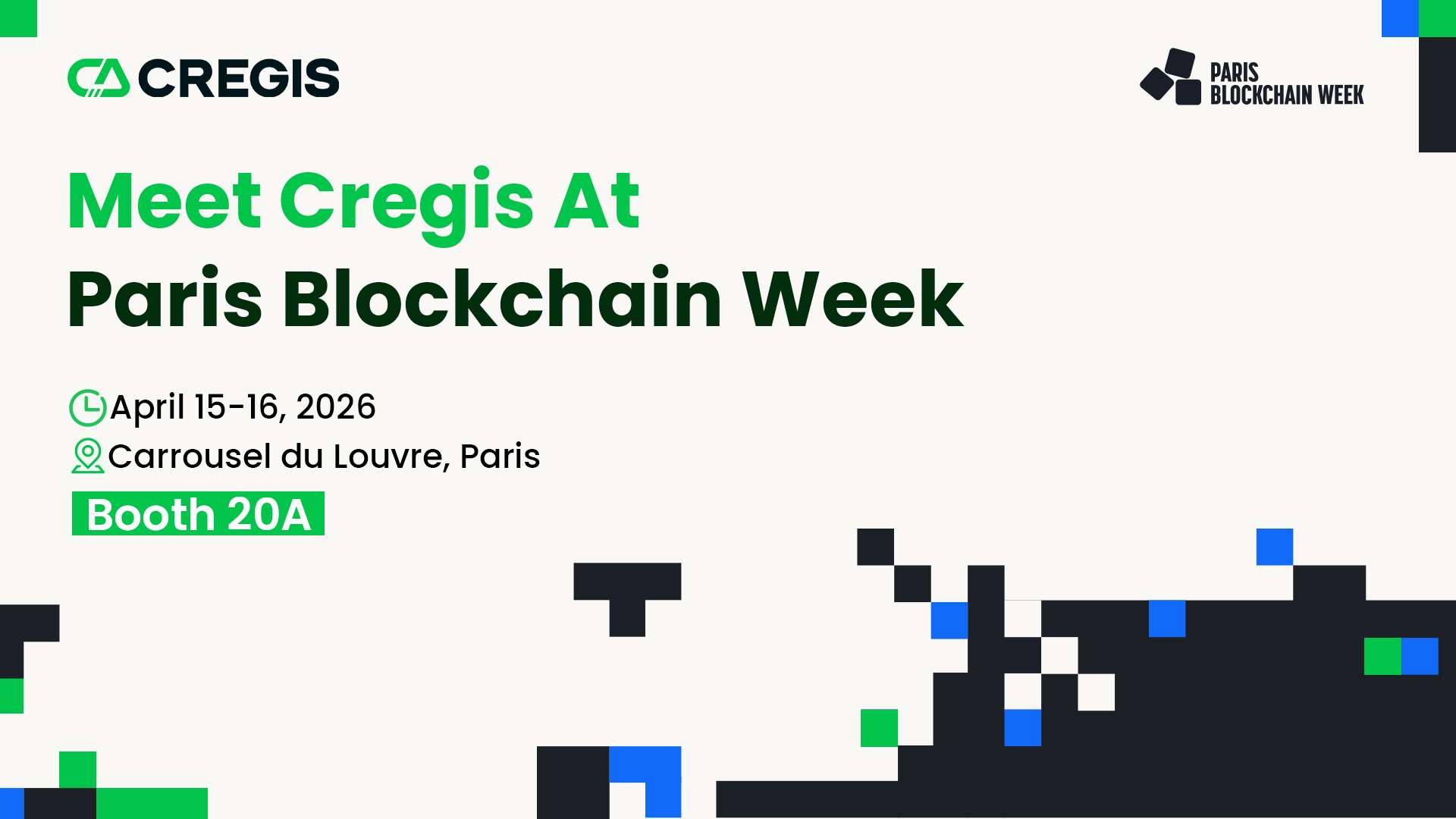
Against this backdrop, one of Europe’s most influential blockchain events, Paris Blockchain Week, will take place on April 15–16, 2026, in Paris. Under the theme “The Bridge Between TradFi and Digital Assets,” this year’s event will focus on the convergence of traditional financial systems and the digital asset ecosystem. Regulators, financial institutions, Web3 projects, and infrastructure providers from around the world are expected to gather to explore the industry’s next phase of development.
Cregis, a digital asset infrastructure provider, will be among the participants, using the opportunity to accelerate its expansion into the European market. At Booth 20A, the team will engage with global partners on the latest developments in institutional custody, enterprise wallet systems, and Web3 payment infrastructure.
From Compliance to Real-World Use: Digital Asset Infrastructure Goes Mainstream
The digital asset industry is undergoing a clear narrative shift from a market driven by trading and liquidity to one centered on infrastructure and real-world applications.
On the regulatory front, clarity is steadily improving. Major markets, particularly in Europe, are advancing legal frameworks and compliance standards for digital assets, providing greater certainty for institutional capital. In this context, compliance is no longer just a constraint, and it is becoming a prerequisite for scale and mainstream adoption.
At the same time, the rapid rise of stablecoins and on-chain payments is reshaping the fundamentals of cross-border transactions and settlement. In areas such as international trade, corporate treasury, and global liquidity management, stablecoins are evolving from niche crypto tools into critical bridges between traditional finance and the on-chain economy.
This shift is also redefining enterprise needs. Rather than focusing solely on trading and asset circulation, the market is increasingly demanding robust, system-level infrastructure: spanning asset security and custody, enterprise wallets, treasury management, on-chain settlement networks, and compliance and risk control mechanisms. As institutional participation deepens, these capabilities are forming the foundation of a new financial stack for global businesses and financial institutions.
Paris Blockchain Week: Where TradFi Meets Digital Assets in Europe
As a key barometer for the European blockchain industry, Paris Blockchain Week has long served as a platform for dialogue among regulators, traditional financial institutions, and Web3 companies.
The 2026 agenda reflects the sector’s most pressing priorities: from evolving regulatory frameworks and compliance standards to the advancement of stablecoin-powered payment infrastructure; from the security and scalability of institutional custody solutions to the redesign of cross-border settlement systems and global liquidity networks; and from Bitcoin treasury strategies to real-world enterprise blockchain adoption.
Together, these themes point to a defining trend: digital assets are no longer operating in isolation, but are increasingly being integrated into the broader financial system.
In Europe, where regulatory systems are mature and financial infrastructure is well established, the key challenge lies in achieving technological innovation and real-world implementation within compliant frameworks. This makes Paris Blockchain Week a critical window into the global institutionalization of digital assets.
Cregis: Building Institutional-Grade Digital Asset Infrastructure
Amid this structural shift, Cregis is focused on delivering secure, compliant, and scalable digital asset infrastructure for enterprises and financial institutions. Its solutions span the full lifecycle from custody and enterprise wallets to payment, settlement, and risk management, while accelerating its footprint in Europe.
“As regulatory frameworks continue to mature and stablecoin use cases expand, digital assets are rapidly integrating into the global financial system. Future competition will no longer be defined by standalone product capabilities, but by a comprehensive edge across infrastructure, compliance, and the ability to serve institutional clients. In the European market, we look forward to working with local partners to explore practical implementation paths, enabling digital asset infrastructure to better support enterprises and financial institutions.” said Richard, Co-founder at Cregis.
At Paris Blockchain Week 2026, the Cregis team will engage in in-depth discussions on institutional custody and security architecture, stablecoin-driven payment and settlement systems, enterprise on-chain treasury management, and collaboration models between Web3 companies and traditional financial institutions. The team will also share insights on compliance and risk management practices in the context of evolving global regulations.
Cregis looks forward to connecting with industry peers at the event, not only to share its latest global practices in digital asset infrastructure, but also to accelerate its expansion in Europe. This includes exploring partnerships with local banks, payment providers, and enterprise clients, and advancing the adoption of stablecoin payments, on-chain settlement, and enterprise wallet solutions across the region.
關於Cregis
Cregis成立於2017年,總部位於香港,是一家面向企業的數字資產基礎設施平台。過去九年間,Cregis已服務全球50多個國家和地區的4,000餘家企業客戶,涵蓋加密交易所、金融科技公司、支付服務商、數字銀行、經紀商及Web3企業等機構。
圍繞企業數字資產運營需求,Cregis構建了覆蓋錢包基礎設施(WaaS)、資金流編排(Rails)及合規託管能力(Custody)的產品體系,幫助企業完成從資產存放與控制、資金流轉與運營,到治理與合規管理的完整閉環。
其中,核心產品 Wallet-as-a-Service 和 Payment Engine 已廣泛應用於企業級數字資產運營場景。隨著數字資產基礎設施需求持續全球化,Cregis始終專注於一件事:幫助企業以更強控制力、更低運營複雜度和更完善的合規能力使用數字資產。