Key Takeaways
- Distributed key generation and collaborative signing reduce the exposure of a complete private key in one place. Security still depends on share custody, endpoint security, and approval policies.
- MPC wallets and multisig wallets can both involve multiple people, but their signing implementations and on-chain visibility differ. Neither is automatically safer in every situation.
- Enterprises should assess signing thresholds, share ownership, staff changes, recovery, audit records, and provider dependency together.
- MPC does not by itself satisfy regulatory obligations or replace transaction monitoring, internal approvals, and incident response.
Introduction
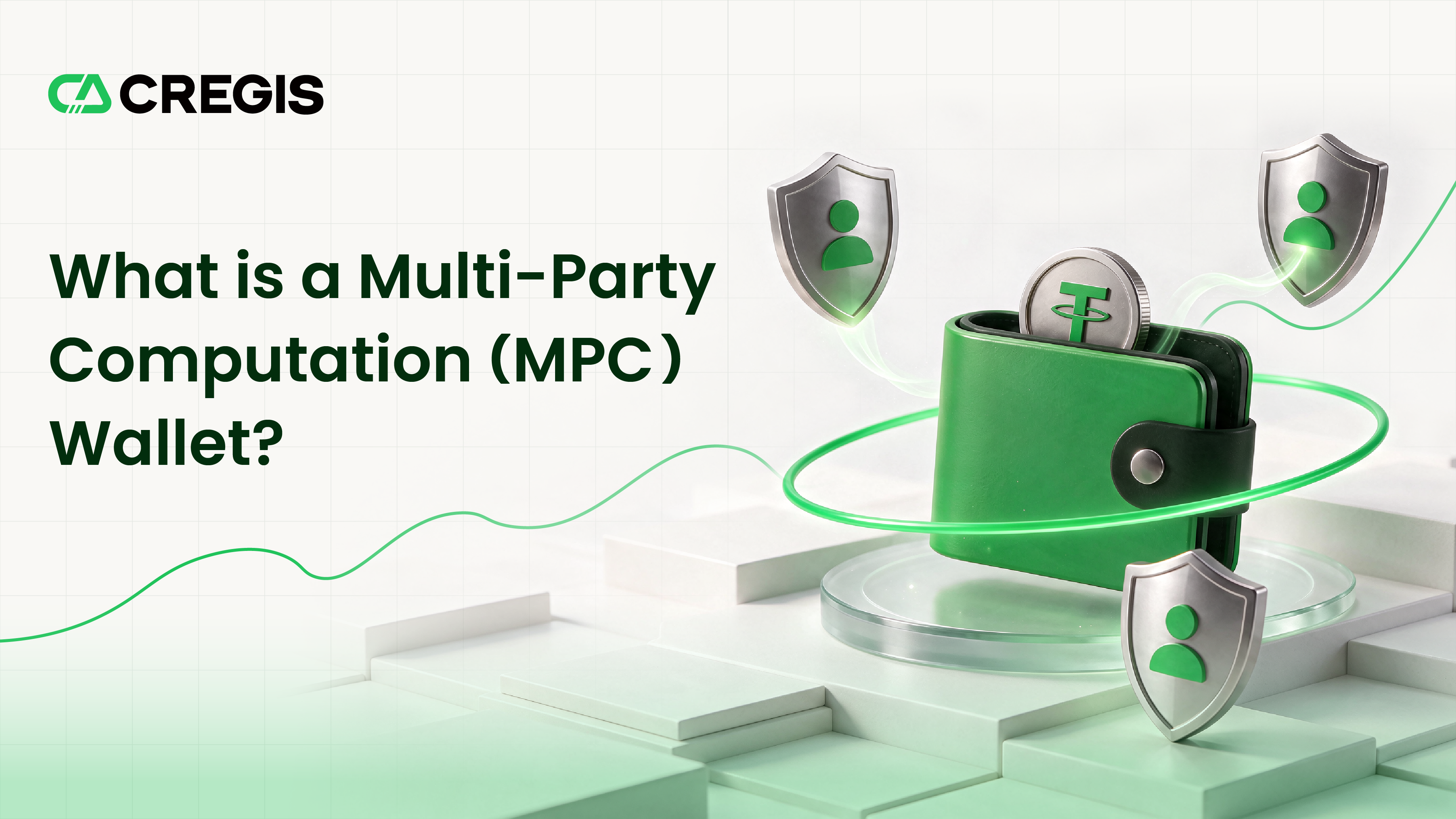
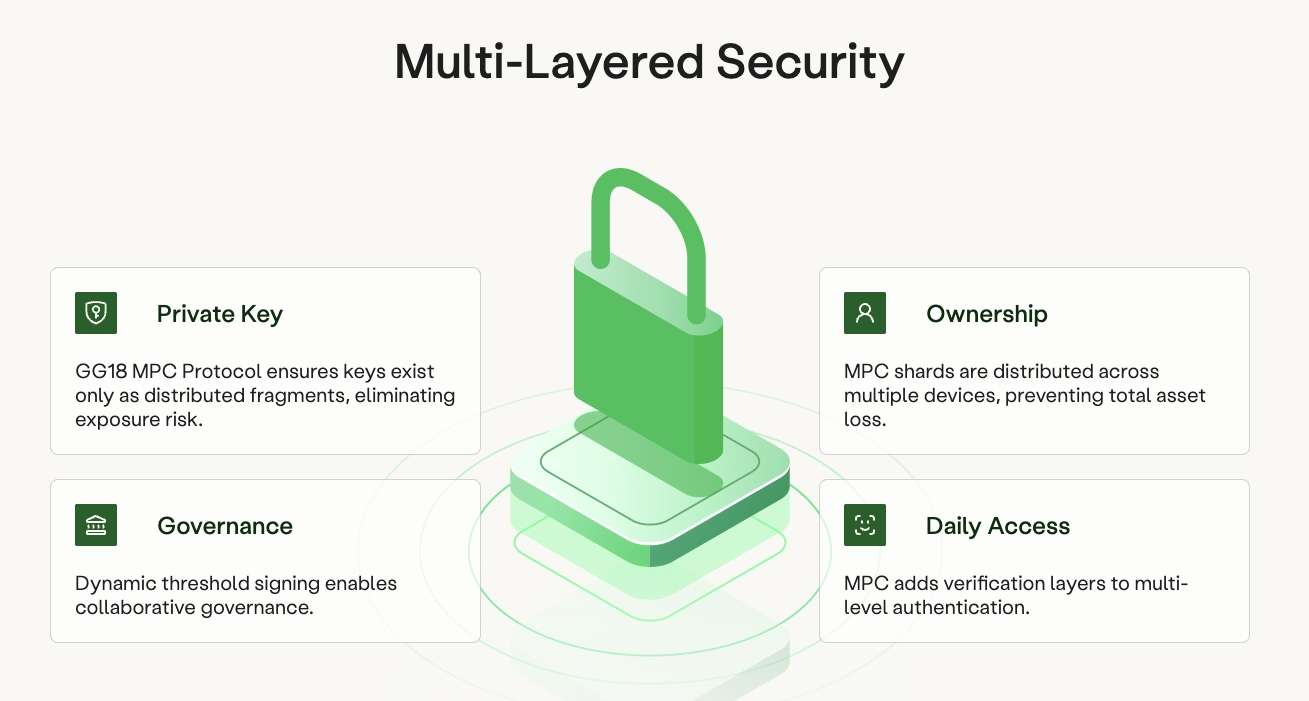
A multi-party computation (MPC) wallet manages digital asset signing by dividing cryptographic control among multiple participants. Each holds a key share. When the required threshold participates, they jointly produce a valid signature without storing or reconstructing the complete private key in one place.
For an enterprise, the value goes beyond splitting a key. Who holds the shares, who can initiate and approve a transaction, how lost devices are recovered, and what happens if a provider is unavailable all affect real-world security. This guide explains the mechanism, operating benefits, trade-offs, and questions to ask before choosing an MPC wallet.
What Is MPC, and How Does It Relate to a Wallet?
Multi-party computation is a class of cryptographic methods that lets participants compute a result using private inputs without revealing those inputs to one another. In a wallet, a common design uses distributed key generation to give different participants key shares. A threshold of participants then collaborates to sign a transaction.
An MPC wallet is a wallet architecture that uses such signing methods, not a separate type of blockchain asset. Whether the enterprise controls the wallet, what role a provider plays, and where shares are stored depend on the deployment. Cregis's MPC overview describes distributed shares and collaborative signing in its self-custody wallet design; it should not be taken to mean every MPC wallet has the same control model.
How Does an MPC Wallet Complete a Transaction?
- Generate and distribute shares. The chosen protocol creates key shares for different participants or devices. The enterprise records who holds each share, how it is backed up, and how access changes.
- Propose a transaction and check policy. An initiator enters the destination, asset, and amount. Business systems may apply address allowlists, limits, and approvals. These operational controls are separate from the MPC algorithm.
- Sign when the threshold is met. Authorized participants take part in the cryptographic computation. Together they produce a signature that the relevant blockchain can verify, without assembling the complete private key on one device.
- Broadcast and record the result. The system submits the transaction and retains the approval, signing, and on-chain outcome for reconciliation and audit. Network confirmation is still required.
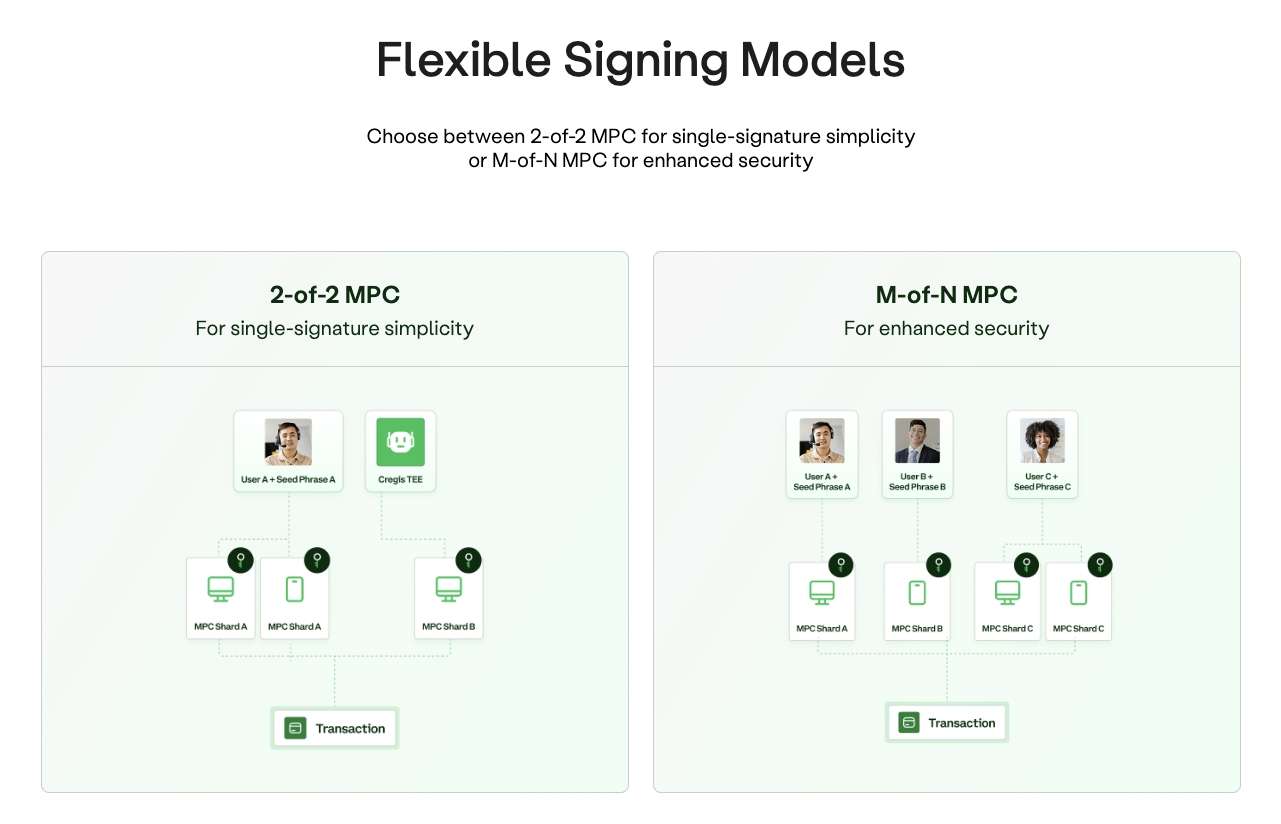
There are two different kinds of “multiple participants” here. The signing threshold determines how many shares are needed to produce a signature. Business approval determines who may request and authorize a transaction. They can work together, but neither replaces the other. Cregis lists 2-of-2 and M-of-N signing models. Enterprises should choose a configuration based on team size and recovery needs, not simply the highest threshold.
What Enterprise Problems Can an MPC Wallet Address?
First, it reduces the exposure of a single complete private key. No one employee or device needs to hold the entire key. That can reduce the risk of one compromised key holder moving funds alone. Assets can still be at risk if an attacker controls enough shares or manipulates the approval process.
Second, it can fit fund operations to organizational roles. Exchanges, payment service providers, and treasury teams may separate transaction initiation, review, and signing. The Cregis WaaS page also describes roles, approval workflows, monitoring, and APIs. These are product capabilities, not inherent features of every MPC wallet.
Third, it can support operations through changes in staff and devices, provided recovery is designed well. Teams need procedures to reset shares, restore access, and handle departures or damaged devices. Cregis describes a reset path involving remaining co-signers for a lost share in its self-custody MPC solution. Enterprises should test the recovery path available in their actual deployment before launch.
How Is an MPC Wallet Different from a Multisig Wallet?
Both can prevent one person from completing a high-risk transfer alone, but the participation happens at different points. MPC typically coordinates signing off-chain and sends the resulting signature to the network. A traditional multisig wallet typically has an on-chain account or smart contract verify authorization from multiple signers. The details vary by network and implementation.
| Dimension | MPC wallet | Traditional multisig wallet |
| Authorization | Key shares collaborate to form a signature | Multiple signers authorize under account or contract rules |
| On-chain visibility | The chain generally sees the final signature; internal approvals need separate records | Rules or execution may be visible on-chain, depending on the design |
| Main dependencies | Share devices, signing protocol, coordination service, and recovery | Signer keys, on-chain account or contract, and permissions |
| Staff changes | Depend on share refresh, reset, and governance design | Depend on whether the account or contract can update signers |
| Cost and coverage | Evaluate signing service and target-network support | Evaluate deployment, execution fees, and target-network support |
This architecture comparison cannot establish that one approach is always cheaper or safer. On-chain authorization visibility may favor traditional multisig; integrating signing control with cross-system business workflows may favor MPC. Cregis's MPC and multisig comparison discusses further technical differences.
What Are the Limitations and Risks of MPC Wallets?
Deployment and recovery are complex. Wider share distribution requires clear device management, replacement, staff handover, and disaster recovery procedures. An untested recovery process can become a bottleneck during an urgent transfer.
Signing still requires collaboration. Enough participants and services must be available. Networks, devices, and approvals can all affect completion time. Off-chain signing does not mean immediate on-chain settlement.
Governance and compliance need separate work. MPC addresses part of signing control. Identity checks, transaction monitoring, access reviews, audit trails, and regulatory obligations depend on the business and jurisdiction.
Control depends on deployment. Using MPC does not automatically mean enterprise self-custody. Confirm who holds each share, whether the provider participates in signing or recovery, and whether the enterprise can retain control if it leaves the provider.
Which Teams Should Consider an MPC Wallet?
MPC is worth assessing when funds require cross-team approvals, daily transaction volume is high, or a single private-key holder creates unacceptable operational risk. Potential users include exchanges, brokers, PSPs, treasury teams, digital banks, and Web3 platforms that need programmable wallet capabilities.
Ask five questions before choosing a solution: Who holds each share? Which transfers require multiple approvals? How is access revoked when someone leaves? How is a lost device recovered? How can the enterprise continue operating if the provider becomes unavailable? An advanced protocol is not enough if these questions have no clear answers.
FAQ
What does MPC stand for in an MPC wallet?
It means multi-party computation. Key shares collaborate to sign without storing the complete private key in one place.
Is an MPC wallet always safer than a cold wallet?
No. Cold wallets emphasize offline storage; MPC emphasizes distributed signing control. The right choice depends on transaction frequency and risk requirements.
Can individuals use MPC wallets?
Yes. Suitability depends on share custody, recovery, and usability, not only whether the user is an individual or an institution.
Is an MPC wallet the same as a multisig wallet?
No. Both can require multiple participants, but MPC generally produces a signature through off-chain collaboration, while traditional multisig verifies multiple signers under on-chain rules.
Does using an MPC wallet make a business compliant?
No. Identity checks, transaction controls, recordkeeping, and local regulatory obligations still need separate processes.
Conclusion
MPC wallets reduce the concentration of a complete private key by using distributed shares and collaborative signing. Their enterprise value depends on share ownership, approvals, recovery, and day-to-day operations, not simply the choice of cryptographic protocol.
Start with the five selection questions above, then compare your requirements with Cregis's MPC overview and WaaS capabilities to determine which configuration may fit.
About Cregis
Founded in 2017 and headquartered in Hong Kong, Cregis is an enterprise digital asset infrastructure platform.
Over the past nine years, Cregis has served more than 4,000 businesses across 50+ countries and regions, including crypto exchanges, fintech companies, payment providers, digital banks, brokers, and Web3 businesses.
Cregis provides a three-layer infrastructure stack spanning Wallet Infrastructure, Fund Flow Orchestration, and Custody Capabilities, enabling enterprises to manage the full lifecycle of digital assets, from asset control and fund operations to governance and compliance.
Its core products, Wallet-as-a-Service (WaaS) and Payment Engine, are widely used across enterprise digital asset use cases. As demand for digital asset infrastructure continues to expand globally, Cregis remains focused on helping businesses operate digital assets with greater control, lower operational complexity, and stronger compliance readiness.