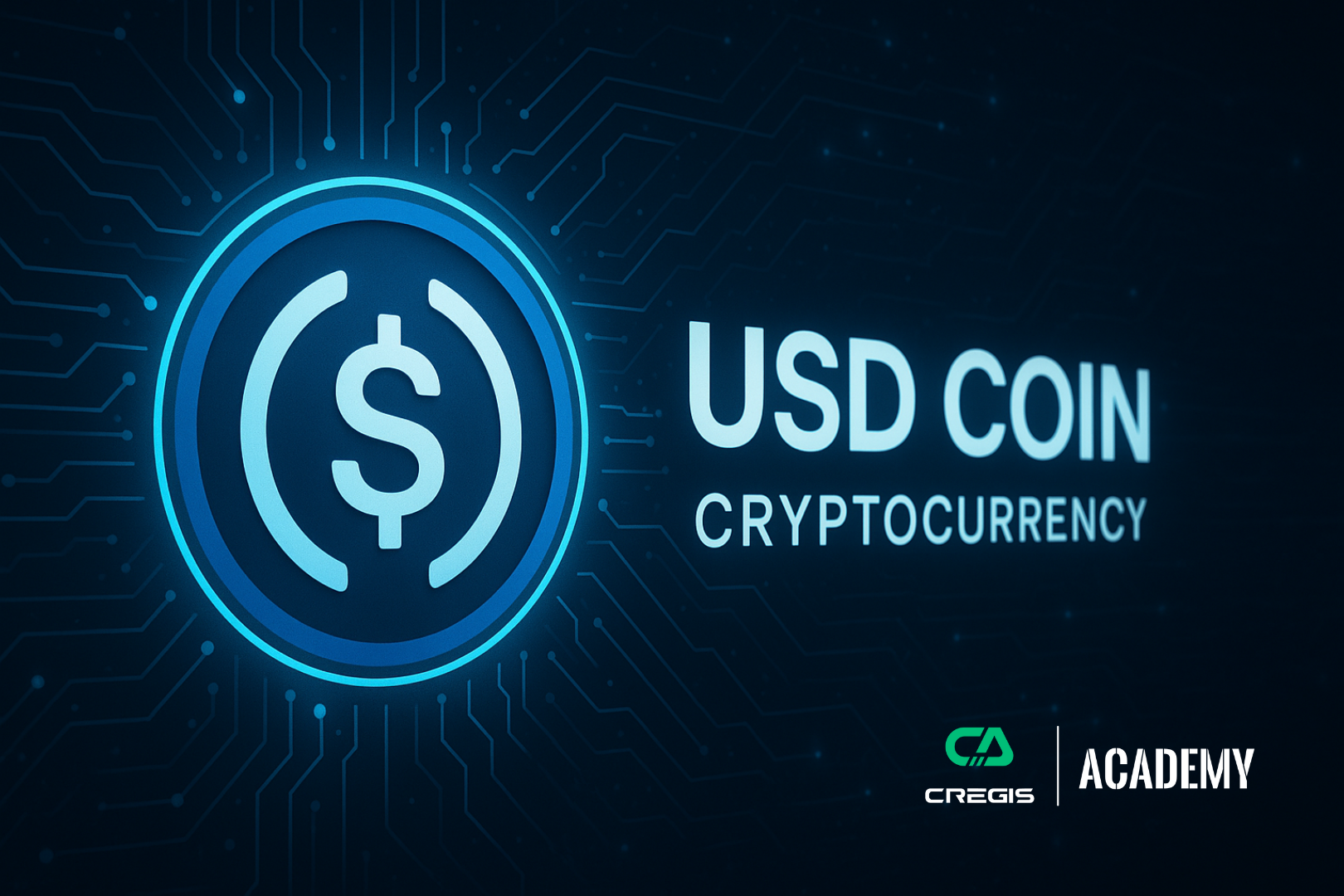
USD Coin (USDC) is a popular stablecoin pegged to the U.S. dollar, offering price stability in a volatile crypto market. As a fully backed digital dollar issued by Circle, USDC plays a vital role in decentralized finance (DeFi), crypto payments, and cross-border transactions.
In this article, we'll break down what USDC is, how it works, who issues it, and its advantages and risks. Whether you're a beginner or a crypto business exploring stablecoin integrations, this guide will help you understand the fundamentals of USDC.
Key Takeaways
- USD Coin (USDC) is a fiat-backed stablecoin pegged 1:1 to the U.S. dollar.
- Issued by Circle, USDC reserves are held in U.S. Treasury instruments and regulated financial institutions.
- It operates on multiple blockchains including Ethereum, Solana, Stellar, and others.
- USDC is widely used for payments, DeFi, trading, and remittances.
- USDC is not designed for price appreciation but for price stability.
What Is USD Coin (USDC)?
USD Coin (USDC) is a regulated stablecoin backed by U.S. dollar cash and equivalents. Designed to maintain a 1:1 peg with the U.S. dollar, it enables users to transact on blockchains with a digital asset that mirrors traditional fiat in price.
Unlike volatile cryptocurrencies like Bitcoin or Ethereum, USDC offers low volatility, making it useful for payments, trading, and value storage.
How Does USDC Work?
Each USDC token is issued when a user deposits one U.S. dollar with Circle or a USDC partner. These dollars are stored in segregated accounts at U.S.-regulated financial institutions. When USDC is redeemed, the tokens are burned, and the equivalent fiat is returned to the user.
USDC is available on several major blockchains:
- Ethereum
- Solana
- Algorand
- Stellar
- Polkadot
- Near
- Noble
This multi-chain support makes USDC highly flexible and interoperable.
Who Issues and Regulates USDC?
USDC was co-created by Circle and Coinbase under the Centre Consortium. However, as of 2023, Circle is now the sole issuer and operator of USDC.
Key regulatory and operational details include:
- Reserve management: The USDC Circle Reserve Fund is managed by BlackRock and held at The Bank of New York Mellon.
- Audits: Deloitte, one of the Big Four accounting firms, provides monthly attestation reports on USDC reserves.
- Not government-issued: USDC is not issued by the U.S. government, but by a private fintech company regulated under U.S. laws.
Use Cases of USD Coin (USDC)
USDC's stability and transparency have led to its adoption across a wide range of use cases:
1. Crypto Trading and Hedging
USDC is widely used on exchanges as a base trading pair and to hedge against crypto volatility.
2. DeFi and Yield Farming
USDC is a key asset in decentralized finance protocols for:
- Liquidity provision
- Lending and borrowing
- Yield generation
3. Remittances and Payments
USDC enables fast, low-cost cross-border transactions without relying on traditional banks.
4. Stable Store of Value
USDC can serve as a digital dollar alternative for users in countries with unstable currencies or high inflation.
5. Blockchain Interoperability
Its compatibility across multiple blockchains allows seamless transfers between platforms, making it ideal for multi-chain apps and wallets.
6. Crowdfunding and Donations
Startups and nonprofits use USDC to raise funds globally, ensuring stable value from contributors.
Advantages and Disadvantages of USDC
| Pros | Cons |
| Pegged to U.S. dollar | No price appreciation |
| Fully backed by fiat assets | Still exposed to U.S. dollar inflation |
| Widely accepted in DeFi | Potential regulatory scrutiny |
| Fast, low-cost transfers | Dependent on trust in issuer and custodians |
Is USDC Always Worth $1?
USDC maintains its $1 peg by holding an equivalent amount of fiat and U.S. Treasury assets. However, minor fluctuations can occur—often within $0.0001 to $0.0006—due to market liquidity or external shocks.
For example, in March 2023, USDC briefly lost its peg when Silicon Valley Bank collapsed, affecting a portion of Circle’s reserves.
Is USD Coin a Good Investment?
USDC is not designed for investment or capital gains. It is meant to preserve value and provide a stable medium of exchange. It can, however, be used within DeFi protocols to earn yield through lending or liquidity provision.
How Much Is One USDC Worth?
Typically, 1 USDC = $1.00. Real-world prices may slightly deviate (e.g., $1.0003), but the peg is strongly maintainedthrough transparent reserves and market mechanisms.
The Bottom Line
USD Coin (USDC) is a trusted stablecoin used across crypto payments, trading, DeFi, and global finance. Pegged to the U.S. dollar and backed by real-world assets, USDC offers a bridge between traditional finance and blockchain innovation.
As a business or investor exploring blockchain solutions, USDC provides the stability necessary for scalable, real-world applications.
Learn More About USD Coin (USDC)
Visit the official USDC website for the latest updates, integrations, and developer resources:
https://www.usdc.com
关于Cregis
Cregis成立于2017年,总部位于香港,是一家面向企业的数字资产基础设施平台。过去九年间,Cregis已服务全球50多个国家和地区的4,000余家企业客户,涵盖加密交易所、金融科技公司、支付服务商、数字银行、经纪商及Web3企业等机构。
围绕企业数字资产运营需求,Cregis构建了覆盖钱包基础设施(WaaS)、资金流编排(Rails)及合规托管能力(Custody)的产品体系,帮助企业完成从资产存放与控制、资金流转与运营,到治理与合规管理的完整闭环。
其中,核心产品 Wallet-as-a-Service 和 Payment Engine 已广泛应用于企业级数字资产运营场景。随着数字资产基础设施需求持续全球化,Cregis始终专注于一件事:帮助企业以更强控制力、更低运营复杂度和更完善的合规能力使用数字资产。