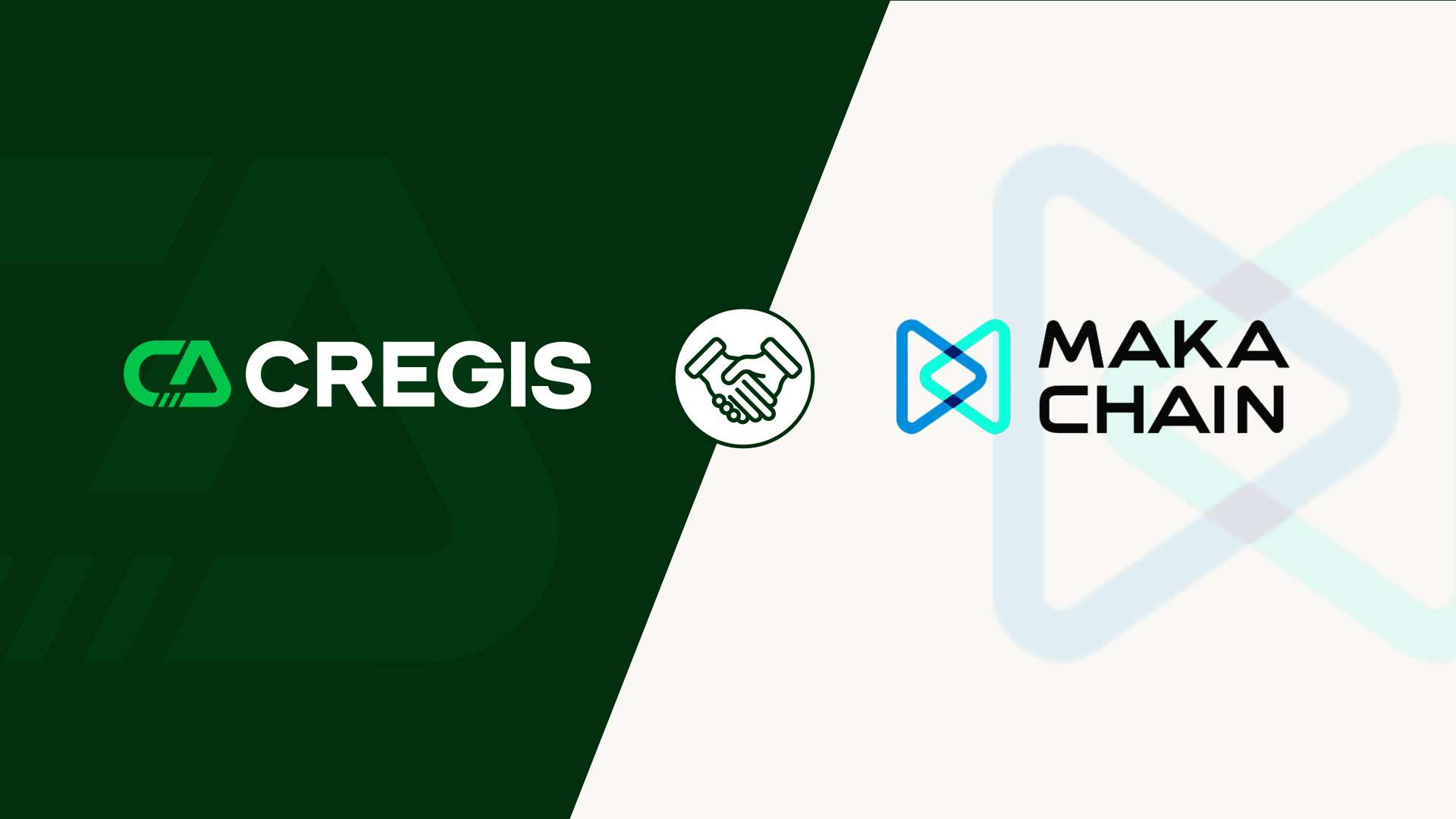
Digital asset infrastructure provider Cregis has integrated MakaChain, an EVM-compatible blockchain designed for real-world payment use cases, into its wallet ecosystem. The integration introduces an asset-based fee model that allows users to pay transaction fees directly in the asset being transferred, removing the need for a separate gas token.
Eliminating Gas Token Friction in Blockchain Payments
One of the persistent challenges in blockchain-based payments is the reliance on native gas tokens to process transactions. Users are often required to maintain a separate balance purely to cover fees, adding operational complexity and increasing the likelihood of failed transactions.
MakaChain addresses this issue by enabling transaction fees to be paid in the same asset being used. For example, transfers in ETH or USDT can be completed without holding an additional token for gas. This approach reduces unnecessary steps in the transaction flow and improves usability, particularly in high-frequency or user-facing payment scenarios.
Designed for payment efficiency, MakaChain supports throughput of up to 4,500 transactions per second and is optimized for peer-to-peer transfers and real-world financial use cases.
Extending Multi-Chain Infrastructure for Payment-Focused Use Cases
With the integration, MakaChain is now accessible within Cregis’ wallet infrastructure, allowing clients to utilize a network tailored for payment efficiency alongside existing multi-chain support.
Cregis provides enterprise-grade wallet infrastructure, including MPC-based self-custody, role-based access controls, and policy-driven transaction governance. By combining these capabilities with MakaChain’s simplified fee model, businesses can implement blockchain payment flows with fewer operational dependencies and lower user friction.
For enterprise users, the integration enables payment experiences that more closely resemble traditional digital payment systems, potentially reducing onboarding complexity and improving transaction completion rates.
Addressing Usability Barriers in Real-World Adoption
The integration comes as businesses increasingly explore stablecoin payments, cross-border settlements, and on-chain financial operations. While blockchain infrastructure has made significant progress in scalability, user experience remains a key barrier to broader adoption.
By removing the need for gas tokens and simplifying transaction mechanics, MakaChain targets a usability gap that has historically limited blockchain payments in both consumer and enterprise contexts.
The collaboration reflects a broader industry trend toward prioritizing usability alongside performance, as digital asset infrastructure providers shift focus from experimentation to real-world deployment.
The MakaChain integration is currently being rolled out within the Cregis wallet. Once fully available, users will be able to send, receive, and manage MakaChain-based assets directly, with transaction fees paid in the transferred asset.
About MakaChain
MakaChain is an EVM-compatible, high-performance blockchain capable of processing 4,500 transactions per second. Its innovative asset-based fee model allows users to pay network fees directly in the asset being transferred, eliminating the need for a separate gas token. MakaChain is dedicated to making blockchain payments as simple as traditional digital payments.
关于Cregis
Cregis成立于2017年,总部位于香港,是一家面向企业的数字资产基础设施平台。过去九年间,Cregis已服务全球50多个国家和地区的4,000余家企业客户,涵盖加密交易所、金融科技公司、支付服务商、数字银行、经纪商及Web3企业等机构。
围绕企业数字资产运营需求,Cregis构建了覆盖钱包基础设施(WaaS)、资金流编排(Rails)及合规托管能力(Custody)的产品体系,帮助企业完成从资产存放与控制、资金流转与运营,到治理与合规管理的完整闭环。
其中,核心产品 Wallet-as-a-Service 和 Payment Engine 已广泛应用于企业级数字资产运营场景。随着数字资产基础设施需求持续全球化,Cregis始终专注于一件事:帮助企业以更强控制力、更低运营复杂度和更完善的合规能力使用数字资产。